Ever wondered why the greatest football show on Earth, the FIFA World Cup, comes around just once in a while? It’s a question many fans ask! We’ll dive deep into the rhythm of this incredible tournament, exploring why it’s held every four years, the huge effort behind it, and what makes each World Cup moment so incredibly special. Get ready to understand the magic behind the schedule!
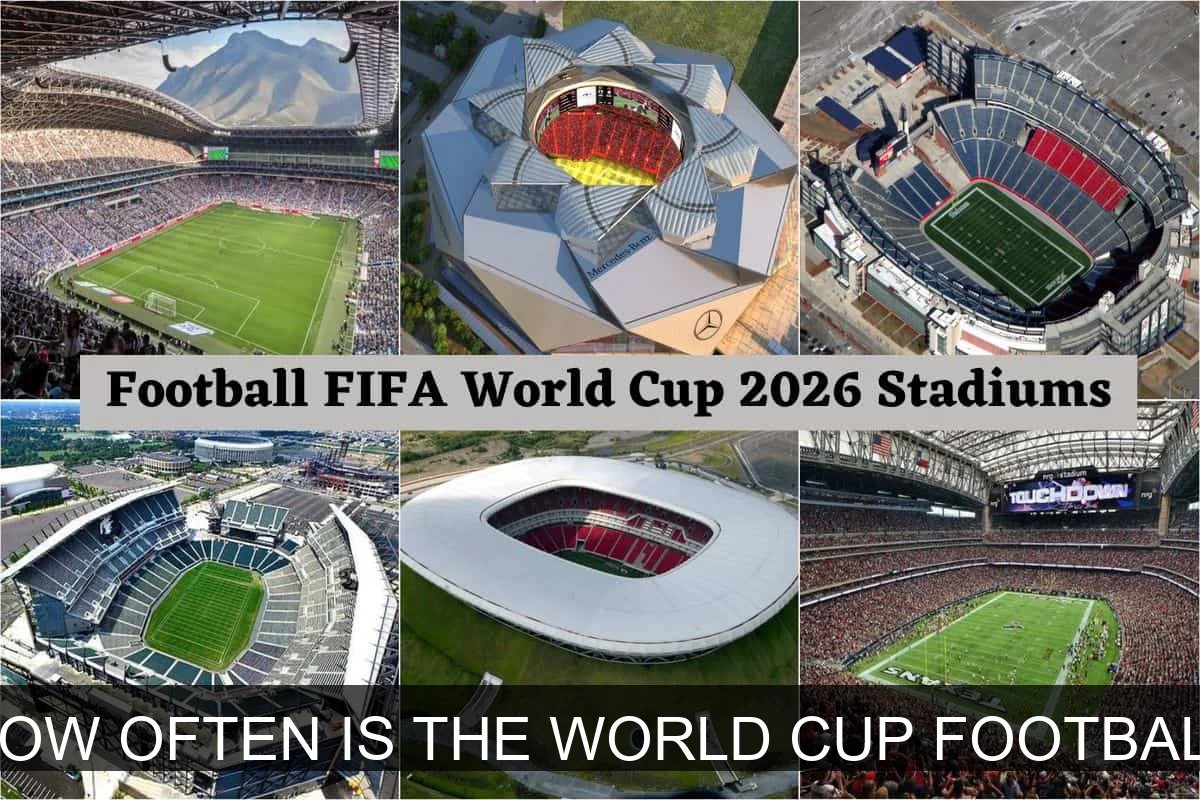
Image source: Footballfanstand
📋 Table of Contents
- 🔹 The Unmistakable Roar: How Often Is The World Cup Football?
- 🔹 Why Every Four Years? More Than Just Tradition
- 🔹 The Road to Glory: The Qualifiers
- 🔹 A Glimpse Back: A Consistent History
- 🔹 The Next Chapter: FIFA World Cup 2026 – Bigger Than Ever!
- 🔹 The Impact of the Wait: Building Anticipation
- 🔹 Fun Facts & Fan Insights About the World Cup
- 🔹 Frequently Asked Questions (FAQ)
- 🔹 The Enduring Magic of the World Cup
The Unmistakable Roar: How Often Is The World Cup Football?
As a football journalist, I’ve been lucky enough to experience the magic of the FIFA World Cup many times. Each tournament brings its own unique drama, unforgettable goals, and stories that echo through history. The excitement is truly unmatched. Every four years, the world stops, eyes fixed on the beautiful game.
So, to answer the big question right away: the FIFA World Cup football tournament is held every four years. This rhythm is as iconic as the golden trophy itself! It’s not just a random number; there’s a deep-seated reasoning behind this consistent schedule that makes the tournament the grand spectacle it is.
Think about it: that four-year wait builds incredible anticipation. It allows for players to grow, new talents to emerge, and nations to prepare for their moment in the spotlight. It makes every single match feel like a truly precious event.
Why Every Four Years? More Than Just Tradition
It might seem like a long time to wait, but the four-year cycle for the World Cup is absolutely essential. It’s not just an old tradition. Many practical and strategic reasons keep this schedule in place.
The Sheer Scale of the Event
Imagine organizing the biggest single-sport event in the world. It’s a monumental task! Planning involves so much more than just booking stadiums. Host nations need to build or upgrade infrastructure, like roads, hotels, and public transport. They also need to create training facilities, security plans, and broadcast centers. This takes years, not months.
For example, the upcoming 2026 FIFA World Cup will be hosted across three nations: the USA, Canada, and Mexico. This is an unprecedented logistical challenge. Coordinating between multiple governments, cities, and time zones requires an enormous amount of time and effort.
Player Welfare and Club Schedules
Professional footballers play an incredible number of games each year for their clubs. They compete in domestic leagues, national cups, and continental competitions. Adding a major international tournament like the World Cup more frequently would put immense strain on players.
- Risk of Injuries: More games mean a higher chance of injuries.
- Player Burnout: Constant high-level play without adequate rest can lead to physical and mental exhaustion.
- Club vs. Country Conflicts: Clubs pay players large salaries. They need their players available for their own crucial matches. A four-year cycle helps balance the demands of club football with international duty.
The football calendar is already packed. FIFA, the global governing body for football, works hard to find a balance. The four-year gap ensures players get enough rest and recovery time. It also allows enough space for qualification tournaments without clashing too much with club commitments.
Qualification and Development
It takes a long time for national teams to even qualify for the World Cup. The qualification process itself spans several years. Teams play dozens of matches across different continents. This process needs a substantial window to unfold fairly and comprehensively.
Also, new talent needs time to develop. A young player might be a promising teenager today. By the time the next World Cup rolls around in four years, they could be a fully-fledged superstar ready to shine on the biggest stage. This waiting period allows for generational shifts and the emergence of new footballing heroes.
The Road to Glory: The Qualifiers
The World Cup final tournament is just the tip of the iceberg. The journey begins years earlier with the qualification rounds. This is where dreams are forged and hearts are broken.
Over 200 nations from six different confederations (AFC for Asia, CAF for Africa, CONCACAF for North/Central America & Caribbean, CONMEBOL for South America, OFC for Oceania, and UEFA for Europe) battle it out for a limited number of spots. These qualifiers typically run for two to three years leading up to the main event. It’s a true global competition, showcasing talent from every corner of the planet.
This extended qualification period is another strong reason why the main World Cup event cannot happen more frequently. The entire ecosystem of international football needs that quadrennial rhythm to function smoothly.
A Glimpse Back: A Consistent History
The FIFA World Cup first took place in 1930 in Uruguay. Since then, with only a few exceptions due to World War II, it has stuck to its four-year cycle. This consistency has built a rich history and tradition around the event.
Think about some of the legendary moments and eras. Pele’s rise, Maradona’s ‘Hand of God’, Zidane’s magic, Messi’s triumph. These stories are etched into the four-year rhythm. The gap between tournaments makes each one feel incredibly precious and significant.
Here’s a quick look at the recent World Cup schedule:
| Year | Host Country/Countries | Winner |
|---|---|---|
| 2010 | South Africa | Spain |
| 2014 | Brazil | Germany |
| 2018 | Russia | France |
| 2022 | Qatar | Argentina |
| 2026 | USA, Canada, Mexico | (To be determined) |
As you can see, the four-year gap is a steadfast rule, creating a reliable and highly anticipated schedule for football fans everywhere.
The Next Chapter: FIFA World Cup 2026 – Bigger Than Ever!
The next World Cup, scheduled for 2026, is going to be truly historic. It marks a significant evolution for the tournament, proving once again why the four-year preparation period is so vital.
Three Nations, One Tournament
For the first time ever, the tournament will be jointly hosted by three nations: the United States, Canada, and Mexico. This means even more venues, more travel, and an even broader geographical spread for the World Cup experience. The coordination required for this scale is immense and underscores the need for a long planning runway.
Expanded to 48 Teams!
Another monumental change for 2026 is the expansion of the tournament from 32 teams to 48 teams. This is a game-changer! It means more countries will get the chance to compete on the biggest stage, bringing joy and excitement to even more nations globally. But it also means a much larger tournament overall.
- More Matches: With 48 teams, the total number of matches will jump significantly. Previously, with 32 teams, there were 64 matches. The exact format for 48 teams has been adjusted, with FIFA announcing a new format featuring 12 groups of four teams, leading to a total of 104 matches.
- More Venues: More matches mean more stadiums and host cities are needed across the three countries.
- New Group Stage Format: The structure of the group stage will change, making the initial phase longer and potentially more complex for fans to follow, though it promises more exciting football.
The scale of the 2026 tournament highlights exactly why “how often is the World Cup football” remains at four years. The preparation, logistical challenges, and sheer magnitude of hosting such an expanded event demand ample time. We’re talking about stadiums, security, fan zones, transportation – all on a colossal scale across three countries. It’s a huge undertaking!
The Impact of the Wait: Building Anticipation
The four-year interval does more than just make the tournament logistically possible. It fuels the anticipation in a way that a more frequent event simply couldn’t. Think about it:
- Emotional Investment: Fans build up incredible excitement over those four years. They follow their national team’s journey through qualifiers, watch their star players develop, and dream of glory.
- Historical Context: Each World Cup becomes a distinct chapter in football history. The gaps allow us to reflect on past tournaments, celebrate heroes, and build new narratives.
- Scarcity Breeds Value: Because it doesn’t happen every year, each World Cup feels incredibly special and precious. Every goal, every save, every victory, and every defeat carries immense weight.
As a fan, I remember the feeling of counting down the days, getting out the old jerseys, and planning watch parties with friends. This shared global experience is amplified by the wait, turning the tournament into a truly global festival.
“The World Cup is not just a tournament; it’s a global phenomenon. Its quadrennial rhythm is key to its mystique and the profound impact it has on people’s lives.”
Fun Facts & Fan Insights About the World Cup
- Did you know that only eight nations have ever won the FIFA World Cup? Brazil leads the pack with five titles!
- The World Cup trophy, made of 18-carat gold, is 36.8 centimeters (14.5 inches) high and weighs 6.175 kilograms (13.61 pounds). It’s a heavy prize!
- The 2026 tournament will feature a record number of matches: 104 in total! That’s a lot of football to enjoy.
- The average attendance for World Cup matches is consistently high, often ranking among the highest for any sporting event globally. Fans truly flock to see their heroes.
Frequently Asked Questions (FAQ)
How often is the World Cup football tournament held?
The FIFA World Cup football tournament is held every four years. This established cycle allows for extensive planning, qualification rounds, and player rest.
Why isn’t the World Cup held every two years?
While there have been discussions about a biennial World Cup, the idea has faced strong opposition. The main reasons are player welfare (risk of burnout and injuries), the already packed international club calendar, the immense logistical demands on host nations, and the desire to maintain the tournament’s unique prestige and anticipation that comes with its four-year cycle.
What is the qualification process like for the World Cup?
The qualification process typically spans two to three years before the main tournament. Over 200 national teams compete in matches organized by their respective continental confederations (e.g., UEFA for Europe, CONMEBOL for South America) to earn one of the coveted spots in the final tournament.
Which countries are hosting the next World Cup in 2026?
The FIFA World Cup 2026 will be jointly hosted by three North American nations: the United States, Canada, and Mexico. This marks the first time three countries will share hosting duties.
How many teams will compete in the 2026 World Cup?
The 2026 World Cup will be the first edition to feature an expanded format with 48 teams, up from the previous 32 teams. This expansion means more matches and more nations getting the chance to compete on the world stage.
The Enduring Magic of the World Cup
So, the answer to “how often is the World Cup football” is clear: every four years. It’s a schedule that has stood the test of time, proving to be the perfect rhythm for creating the world’s most anticipated and beloved sporting event. The wait builds the hunger, the preparation ensures perfection, and the outcome creates legends.
From the tension of the qualification rounds to the euphoria of the final whistle, every World Cup is a journey. It brings people together, transcends borders, and creates memories that last a lifetime. As we look forward to the expanded spectacle of 2026 across USA, Canada, and Mexico, the excitement is already building. That four-year cycle is part of what makes it so incredibly special. Which teams are you hoping to see make history next time?