The 2026 FIFA World Cup is coming to North America, and with it, questions arise about Donald Trump’s potential presence given his past involvement in securing the bid. We’ll explore his historical role, the tournament’s monumental scale across the USA, Canada, and Mexico, and what his attendance might mean for football fans and the global spectacle.
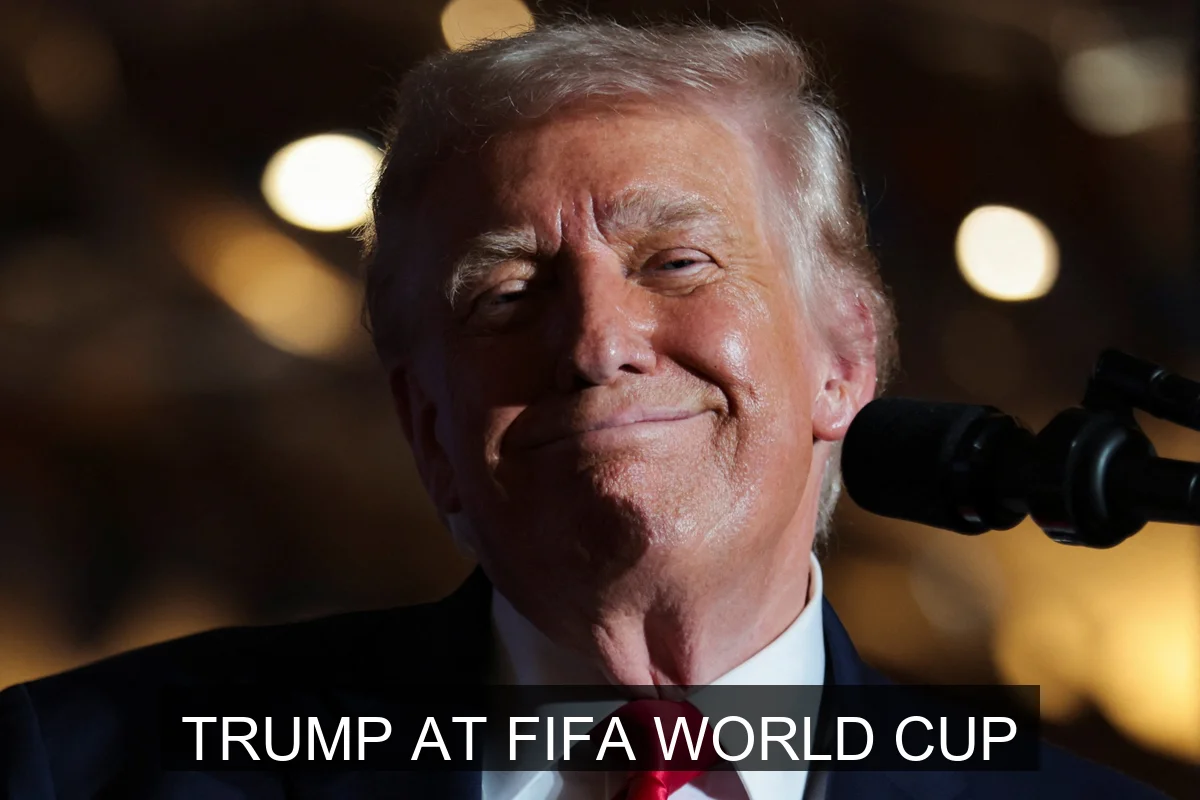
Image source: Tuoitre
📋 Table of Contents
- 🔹 The Buzz Around 2026 and Trump’s Connection
- 🔹 A Look Back: Trump’s Role in Securing the Bid
- 🔹 The 2026 FIFA World Cup: A New Era
- 🔹 The Question: Will Trump Be at the FIFA World Cup?
- 🔹 Football, Politics, and Public Opinion
- 🔹 Beyond the Headlines: The True Spirit of the World Cup
- 🔹 Frequently Asked Questions (FAQ)
- 🔹 Conclusion: Looking Ahead to a Monumental Event
The Buzz Around 2026 and Trump’s Connection
Hey there, fellow football fanatics! Can you believe it? The FIFA World Cup is coming to North America in 2026, and the excitement is already building. It feels like just yesterday we were watching the drama unfold in Qatar, and now we’re looking forward to an even bigger spectacle right here.
But beyond the goals, the drama, and the incredible atmosphere, there’s a unique angle generating a bit of chatter: the potential presence of Donald Trump at the FIFA World Cup. Given his past involvement in the bid process, it’s a topic many people are curious about. Let’s dive in and explore what his connection is and what we might expect.
A Look Back: Trump’s Role in Securing the Bid
Remember back to 2018? The bid for the 2026 FIFA World Cup was a big deal. It was a joint effort, known as the United Bid, involving the USA, Canada, and Mexico. They were up against a strong contender, Morocco.
The United Bid’s Journey
The decision to expand the World Cup to 48 teams meant a huge undertaking. A single host nation would have struggled with the logistics, making a joint bid very appealing. The North American bid highlighted existing infrastructure, world-class stadiums, and a passionate fan base across three nations.
Presidential Influence
During the bidding process, Donald Trump was the President of the United States. He wasn’t shy about using his platform to promote the United Bid. He even sent letters to FIFA, offering assurances and support. There were also public statements and tweets, some of which certainly caught attention.
For example, he famously tweeted about countries that might oppose the bid:
“The U.S. has put together a STRONG bid w/ Canada & Mexico for the 2026 World Cup. It would be a shame if countries that we always support were to lobby against the U.S. bid. Why should we be supporting these countries when they don’t support us (including at the U.N.)?”
This direct approach was characteristic of his presidency. While FIFA maintains that sporting decisions are separate from politics, many observers felt his vocal support, and perhaps even his implied warnings, played a part in highlighting the bid’s importance from a US perspective.
Ultimately, the United Bid won, securing 134 votes compared to Morocco’s 65. It was a huge moment for North American football, and Trump was certainly a figure associated with the successful outcome.
The 2026 FIFA World Cup: A New Era
Before we delve deeper into Trump’s potential attendance, let’s take a moment to appreciate the sheer scale of the upcoming tournament. It’s going to be historic in so many ways.
Expanded Format: 48 Teams!
This will be the first-ever FIFA World Cup to feature 48 teams, up from the traditional 32. This means more matches, more countries participating, and even more global excitement! The tournament will include 104 matches played across 16 host cities.
The new format will likely involve 12 groups of four teams, with the top two and eight best third-placed teams advancing to a new Round of 32. It’s a massive change, promising more unexpected twists and turns.
Host Cities and Anticipation
The host countries are the USA, Canada, and Mexico. Each country will showcase its unique football culture and hospitality.
- USA: Atlanta, Boston, Dallas, Houston, Kansas City, Los Angeles, Miami, New York/New Jersey, Philadelphia, San Francisco Bay Area, Seattle.
- Canada: Toronto, Vancouver.
- Mexico: Guadalajara, Mexico City, Monterrey.
Imagine the atmosphere in these cities! The blend of different cultures, languages, and fan bases will create an unforgettable carnival. The schedule is expected to be spread out, giving fans plenty of opportunities to travel and soak it all in. Teams will be preparing for qualifiers in the coming years, all hoping to secure their spot in this monumental event.
The Question: Will Trump Be at the FIFA World Cup?
Now for the big question: will we see Donald Trump at the FIFA World Cup in 2026? It’s a topic that brings together sports, politics, and public interest.
As a Former President
As a former President of the United States, Donald Trump holds a unique status. Former presidents often attend major national or international events, sometimes as invited dignitaries, sometimes as private citizens. Given his direct involvement in securing the bid, it’s certainly plausible he would want to be present at some capacity.
If he were to attend, it could be for opening ceremonies, key matches involving the US team, or other significant events. His presence would undoubtedly attract significant media attention, both from political and sports journalists.
Public Figure and Fan Dynamics
Beyond any official capacity, Trump remains a highly prominent public figure. Whether he holds an official role or not, his attendance would be a talking point. Some fans might welcome it, seeing it as a nod to his role in bringing the tournament to North America. Others might view it differently, bringing a political dimension to a sporting event they prefer to keep separate.
Football, for many, is an escape from the day-to-day political discourse. The World Cup, in particular, is a time when nations come together, often setting aside differences to celebrate the beautiful game. The presence of a polarizing political figure could add a layer of complexity to this dynamic.
Security and Protocol Considerations
If Donald Trump attends any World Cup event, security would be a major consideration. Former presidents in the USA typically receive Secret Service protection for life. This means that any venue he visits would require extensive security planning and coordination, not just with local law enforcement but also with federal agencies and FIFA’s own security protocols.
This level of security is standard for high-profile figures, but at an event of the World Cup’s magnitude, it adds another layer to an already complex operation.
Football, Politics, and Public Opinion
The intersection of football and politics is nothing new. Major sporting events often become platforms for various messages, and the 2026 World Cup will be no different. The question of Donald Trump’s presence highlights this intersection.
The Intersection of Sport and State
From opening ceremonies featuring heads of state to political leaders using sporting events for diplomatic purposes, sports and state affairs have long been intertwined. The decision to award a World Cup to a host nation often involves political lobbying and international relations, as seen with the United Bid.
The host nations, especially the USA, will be showcasing themselves to the world. Any prominent political figure’s attendance will be viewed through this lens.
Fan Reactions and Media Spotlight
Fan reactions could be varied. Some might simply enjoy the football, indifferent to who is in the VIP box. Others might express strong opinions, either positive or negative, about a political figure’s attendance. The media, both sports and news outlets, would undoubtedly cover his presence extensively, analyzing its significance and public reception.
It’s part of the modern media landscape. When a figure like Trump attends a global event, it becomes part of the narrative, whether we like it or not.
Beyond the Headlines: The True Spirit of the World Cup
While the discussions around a high-profile figure like Donald Trump are interesting, it’s important not to lose sight of what the FIFA World Cup truly represents.
Unity and Global Celebration
The World Cup is, at its heart, a celebration of unity, diversity, and the sheer joy of football. It’s a rare occasion where people from all corners of the globe come together, often transcending political differences to cheer for their teams and appreciate incredible athletic performances.
Imagine fans from Argentina, Brazil, Germany, Japan, and all the participating nations, sharing stories, singing songs, and celebrating goals in the streets of Dallas or Mexico City. That’s the magic.
Economic and Cultural Impact for Host Nations
The tournament will bring immense economic benefits to the host countries. Tourism, hospitality, infrastructure improvements, and job creation will see a significant boost. Furthermore, it’s a chance for the USA, Canada, and Mexico to showcase their vibrant cultures, beautiful cities, and warm hospitality to millions of visitors and billions of viewers worldwide.
It’s about more than just matches; it’s about cultural exchange, building bridges, and creating lasting memories for everyone involved.
Frequently Asked Questions (FAQ)
| Question | Answer |
|---|---|
| Who are the host countries for the 2026 FIFA World Cup? | The host countries are the United States, Canada, and Mexico. This is the first time three nations will co-host the tournament. |
| Did Donald Trump play a role in the 2026 World Cup bid? | Yes, as the sitting President of the United States, Donald Trump publicly supported and advocated for the United Bid (USA, Canada, Mexico) to host the 2026 World Cup. |
| How many teams will participate in the 2026 World Cup? | The 2026 tournament will be the first to feature 48 teams, an expansion from the previous 32-team format. |
| Will Trump officially attend the 2026 FIFA World Cup? | There has been no official announcement regarding Donald Trump’s attendance. If he attends, it would likely be as a former president or private citizen, attracting significant media attention. |
| When does the 2026 FIFA World Cup take place? | The tournament is expected to take place in June and July of 2026. Specific dates and match schedules are still being finalized. |
Conclusion: Looking Ahead to a Monumental Event
The 2026 FIFA World Cup is shaping up to be an unparalleled global event. With 48 teams, matches across three incredible countries, and a truly global audience, it promises to be a spectacle of footballing excellence and cultural celebration.
The discussion around Donald Trump at the FIFA World Cup is a fascinating sidelight, a reminder of how intertwined sports and broader public life can be. Whether he attends in an official capacity or as a passionate observer, his past connection to the successful bid means he will forever be part of the tournament’s backstory.
Ultimately, when the whistle blows for the first match in 2026, the focus will shift to the players, the teams, and the beautiful game itself. Get ready for an unforgettable journey, football fans!
What are your thoughts? Are you excited for the 2026 World Cup? Let us know in the comments below!