Ever wondered about the rhythm of global football? The FIFA World Cup, football’s premier event, lights up our lives every four years. This detailed guide explores why this quadrennial schedule is essential, covering the immense planning for host countries, the rigorous qualification process, and the incredible impact on teams and fans worldwide.
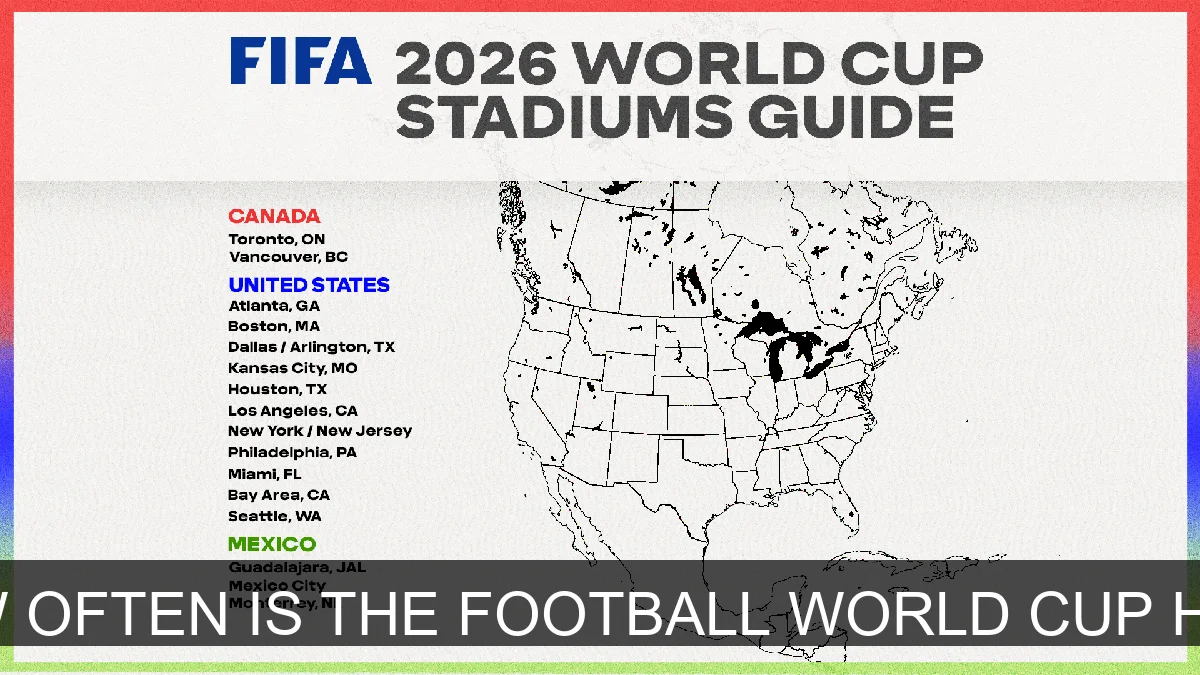
Image source: Insidesport
📋 Table of Contents
- 🔹 How Often Is The Football World Cup Held? The Simple Answer
- 🔹 Why Every Four Years? More Than Just Tradition
- 🔹 The Grueling Road to the World Cup: Qualification Explained
- 🔹 Bringing the World Together: The Host Nation’s Mammoth Task
- 🔹 Looking Ahead: The Expanded 2026 World Cup
- 🔹 The Magic of the Four-Year Cycle for Fans
- 🔹 Frequently Asked Questions About the World Cup Schedule
- 🔹 Our World Cup Journey Continues
There’s nothing quite like the FIFA World Cup, is there? The excitement, the drama, the pure global spectacle. From the opening whistle to the final trophy lift, it brings the entire planet together. I remember waking up at odd hours as a kid, just to catch a glimpse of my heroes on the pitch. It’s a truly special event.
One common question I hear from new fans, or even seasoned supporters planning their lives around the beautiful game, is: “How often is the football World Cup held?” It’s a great question, and the answer reveals a lot about the massive undertaking this tournament truly is.
How Often Is The Football World Cup Held? The Simple Answer
Let’s get straight to it. The football World Cup is held every four years. It’s a quadrennial event, meaning it takes place once every four years. This cycle has been in place almost since the tournament’s inception in 1930, with a few notable exceptions due to World War II in 1942 and 1946.
So, when you experience the magic of a World Cup, cherish it! You’ll have to wait a little while for the next one. This rhythm creates anticipation and allows for all the incredibly complex planning that goes into making it the world’s biggest sporting event.
Why Every Four Years? More Than Just Tradition
You might think, “Why not every two years? Or five?” It’s a valid thought. But the four-year cycle isn’t just an arbitrary tradition. It’s a carefully considered schedule that balances several critical factors, ensuring the tournament remains prestigious, manageable, and impactful.
The Sheer Scale of the Event
Imagine organizing a global event that involves hundreds of nations, thousands of players, and millions of fans. It’s a colossal task! The World Cup isn’t just a few `matches` played over a weekend. It’s a month-long festival of football that demands immense logistical and financial resources. A shorter cycle would simply be unsustainable.
Respecting Other Competitions
Football’s calendar is already packed. There are continental tournaments like the UEFA European Championship (Euros), Copa América, Africa Cup of Nations, and AFC Asian Cup, all of which also operate on their own cycles, usually every four years. Plus, domestic leagues and cup competitions run annually. A four-year World Cup cycle allows space for these other important events, preventing player burnout and fixture congestion.
Building Anticipation
Part of the World Cup’s allure is its rarity. The wait builds anticipation, making each tournament feel incredibly special. If it happened more frequently, some of that unique magic might fade. That long wait fuels our dreams and gives us plenty of time to build up excitement for the next one.
The Grueling Road to the World Cup: Qualification Explained
Before any final tournament can kick off, there’s a long, arduous journey for most `teams`: the `qualifiers`. This process alone stretches over several years within the four-year cycle, highlighting why a shorter overall gap would be impractical.
Almost all of FIFA’s 211 member associations try to qualify. These `teams` are grouped into their respective continental confederations (e.g., UEFA for Europe, CONMEBOL for South America). Each confederation runs its own qualification format, which can involve dozens of `matches` played over two to three years.
- Early Stages: Smaller nations might play preliminary rounds.
- Group Stages: Many `teams` compete in `groups`, playing home and away `matches`.
- Play-offs: Sometimes, `teams` play sudden-death play-offs to secure their spot.
Only a select number of `teams` from each confederation make it to the final tournament. For example, Europe typically has around 13 slots, while South America might have 4 or 5. This intense competition means every qualification match carries huge weight, adding to the drama long before the main event begins.
Bringing the World Together: The Host Nation’s Mammoth Task
Hosting the World Cup is a monumental undertaking. It’s not just about having a few stadiums. It’s about a complete overhaul and upgrade of infrastructure. Think about it:
- Stadiums: Multiple world-class `venues` are needed, often requiring new construction or major renovations.
- Infrastructure: Roads, public transport, airports, hotels – everything needs to be ready for an influx of millions of fans and media.
- Security: Ensuring the safety of everyone involved is a top priority.
- Logistics: Managing team training facilities, media centers, and fan zones across multiple cities is complex.
The bidding process for `host countries` often begins years in advance. Nations typically need at least five to seven years to prepare adequately once awarded the hosting rights. The four-year gap between tournaments is therefore crucial for successful planning and execution.
“The World Cup is more than just a tournament; it’s a nation-building project for host countries. It leaves a lasting legacy, but demands immense preparation.”
Looking Ahead: The Expanded 2026 World Cup
The next iteration of the tournament, the 2026 FIFA World Cup, will actually be quite different! It will be held across three host countries for the first time: USA, Canada, and Mexico. This event also marks a significant expansion in the number of participating `teams`.
More Teams, More Matches
For the first time ever, the 2026 World Cup will feature 48 `teams`, up from the traditional 32. This expansion means more countries get a chance to compete on the world stage, bringing even more diversity and excitement to the tournament. While the exact `schedule` and `groups` are still being finalized, it will involve many more `matches` than before.
More Venues, More Cities
With three `host countries` and an expanded number of `teams` and `matches`, the 2026 tournament will utilize a vast array of `venues`. Major cities across all three nations, like Los Angeles, Dallas, Toronto, Vancouver, Mexico City, and Guadalajara, are expected to host games. This widespread hosting further emphasizes the need for a four-year interval to coordinate such a massive event.
| World Cup Year | Host Country(s) | Number of Teams | Key Note |
|---|---|---|---|
| 2014 | Brazil | 32 | Classic 32-team format |
| 2018 | Russia | 32 | Europe’s first World Cup since 2006 |
| 2022 | Qatar | 32 | First winter World Cup |
| 2026 (Expected) | USA, Canada, Mexico | 48 | First tri-nation host; expanded format |
The Magic of the Four-Year Cycle for Fans
For us fans, the four-year wait is part of the charm. It means every World Cup feels like a truly momentous occasion. Think about these aspects:
- Hero Journeys: Players evolve dramatically in four years. A young talent can become a global superstar, or an established veteran might play their final tournament. We see these incredible arcs.
- Team Evolution: National `teams` change. New players emerge, tactics shift, and rivalries deepen. The wait allows for real development.
- Memory Making: Each tournament creates unforgettable memories. My dad still talks about the ’94 World Cup, and I’ll forever cherish the 2014 final. These moments are etched into our collective memory, partly because of their special, infrequent nature.
- Economic Impact: While not a direct fan benefit, the longer cycle allows `host countries` to maximize tourism and economic gains, which can then be reinvested into developing local football and infrastructure.
The rhythm of “every four years” is deeply ingrained in the fabric of international football. It’s what makes the build-up, the `qualifiers`, the group stage `matches`, and the knockout drama so intensely anticipated.
Frequently Asked Questions About the World Cup Schedule
Here are some common questions I often hear about the World Cup schedule:
How long does the World Cup tournament itself last?
The final tournament typically lasts about a month, or 28-32 days, from the opening match to the final. This allows for `group` stage `matches`, knockout rounds, and rest days for the `teams`.
Has the World Cup always been held every four years?
Largely, yes. Since its first tournament in 1930, the quadrennial cycle has been the standard. The only exceptions were 1942 and 1946 due to World War II.
Were there ever discussions to change the World Cup frequency?
Yes, there have been discussions, notably a proposal from FIFA to hold the World Cup every two years. However, this idea faced strong opposition from confederations, clubs, player unions, and even national associations, largely due to concerns about player welfare, fixture congestion, and the potential devaluation of other major tournaments. As a result, the four-year cycle remains in place.
How many teams participate in the World Cup?
Historically, 32 `teams` have participated in the final tournament. However, starting with the 2026 World Cup, the number of participating `teams` will expand to 48.
When will the next World Cup be held?
The next FIFA World Cup will be held in 2026, hosted by the USA, Canada, and Mexico.
Our World Cup Journey Continues
So, the next time someone asks you “how often is the football World Cup held?”, you can confidently tell them it’s every four years, and explain exactly why that cycle is so vital. It’s a testament to the scale, prestige, and planning required for an event that truly unites the world.
The quadrennial wait is part of what makes the World Cup so precious. It gives us time to dream, to watch new stars emerge, and to anticipate the moment when our nation’s colours once again grace the biggest stage. Each tournament is a chapter in football history, and we wouldn’t want it any other way.
What are your fondest World Cup memories? Which `teams` are you excited to see in the `qualifiers` for 2026? Share your thoughts below, and let’s keep the beautiful game’s spirit alive until the next grand celebration!