Have you ever wondered about the golden trophy lifted by football legends? This post dives deep into the incredible story of the FIFA World Cup trophy, from its dramatic history to its iconic design. We explore what makes this ultimate prize so special, its journey around the world, and the dreams it inspires in every player and fan.
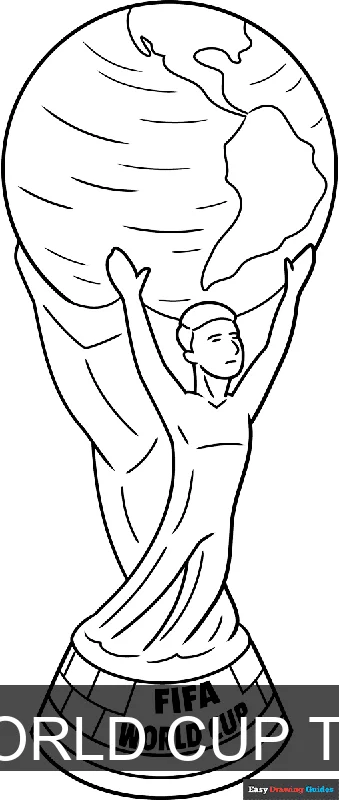
Image source: Easydrawingguides
📋 Table of Contents
- 🔹 The Unforgettable Icon
- 🔹 The Legacy of the Jules Rimet Trophy
- 🔹 The Modern FIFA World Cup Trophy: A Masterpiece
- 🔹 Design and Symbolism
- 🔹 The Trophy’s Grand Tour and Strict Rules
- 🔹 The Ultimate Dream: Lifting the Trophy
- 🔹 The FIFA World Cup Trophy and Future Tournaments
- 🔹 Frequently Asked Questions (FAQ)
- 🔹 The Golden Legacy Continues
The Unforgettable Icon
Hey there, fellow football fanatics! Have you ever paused to think about that iconic golden object that captures the hearts of billions every four years? I’m talking, of course, about the FIFA World Cup trophy. It’s more than just a piece of metal; it’s a symbol of ultimate triumph, endless dreams, and the unifying power of the beautiful game.
Just imagine standing on that pitch, sweat dripping, the roar of the crowd deafening, and knowing that one glorious moment could lead to you lifting that trophy. It’s a feeling most of us can only dream of, but for the world’s best footballers, it’s the pinnacle of their careers. For nations, it’s a source of immense pride.
Today, let’s embark on a journey. We’ll explore the fascinating history, intricate design, and incredible stories behind the FIFA World Cup trophy. Get ready to fall in love with football’s greatest prize all over again!
The Legacy of the Jules Rimet Trophy
Before the current golden marvel, there was another legendary trophy: the Jules Rimet Trophy. Named after the former FIFA President who initiated the World Cup, this was the original prize awarded from 1930 to 1970.
It depicted Nike, the Greek goddess of victory, holding an octagonal cup. Crafted from gold-plated sterling silver and lapis lazuli, it stood roughly 35 cm tall and weighed about 3.8 kg. A classic, elegant design, it became synonymous with early World Cup glory.
A History of Disappearance and Recovery
The Jules Rimet Trophy had a dramatic life. Do you remember the story of its disappearance? It was stolen just before the 1966 World Cup in England! The nation held its breath, but thankfully, a brave dog named Pickles famously found it wrapped in newspaper under a bush. What a hero!
Brazil earned the right to keep the Jules Rimet Trophy permanently after winning their third World Cup title in 1970. This “permanent ownership” rule was part of the original FIFA regulations. However, the story took a sad turn in 1983 when it was stolen again from the Brazilian Football Confederation headquarters in Rio de Janeiro. This time, it was never recovered, believed to have been melted down. A truly heartbreaking end for such a historic artifact.
The Modern FIFA World Cup Trophy: A Masterpiece
Following the Jules Rimet Trophy’s permanent retirement (and subsequent disappearance), FIFA needed a new prize. They commissioned a new trophy for the 1974 World Cup. Fifty-three designs were submitted from seven countries, but one stood out: the creation of Italian artist Silvio Gazzaniga.
Gazzaniga’s design perfectly captured the energy and triumph of football. He envisioned two athletes, full of joy and excitement, raising their arms in victory, supporting the Earth. It truly is a sight to behold.
Design and Symbolism
Let’s talk details. The current FIFA World Cup trophy is stunning. Here’s a quick look at its features:
- Material: It’s made of 18-carat gold and has two layers of malachite at its base. While often called “solid gold,” it’s not entirely solid due to its weight.
- Height: It stands tall at 36.8 centimeters (14.5 inches).
- Weight: It weighs a significant 6.175 kilograms (13.61 pounds). Imagine lifting that above your head after 120 minutes of football!
- Inscription: The base bears the engraved names of the winning nations since 1974. There’s only so much space, so FIFA rotates the names to ensure all champions are recognized.
The symbolism is beautiful. Those two figures at the base are dynamic, reaching out, celebrating success. They seem to burst forth from the base, embodying the joy and sheer effort involved in reaching the top of world football. The globe they hold symbolizes the worldwide reach of the game.
The Trophy’s Grand Tour and Strict Rules
The actual FIFA World Cup trophy rarely leaves FIFA’s headquarters in Zurich, Switzerland, except for two main events: the final draw of the World Cup and the final match itself. It’s a highly protected artifact, and for good reason!
Who Gets to Touch It?
Here’s a fun fact you might not know: only a very select group of people are allowed to touch the real FIFA World Cup trophy. This includes former World Cup winners and heads of state. So, if you’re ever lucky enough to be near it, hands off unless you’ve earned that special privilege!
The Replica for the Winners
What happens after a team wins? Do they get to keep the actual trophy? Not quite! The winning nation receives a gold-plated replica, known as the “FIFA World Cup Winners’ Trophy.” This replica is slightly different from the original and is theirs to keep forever. The original trophy returns to FIFA, ready for the next tournament.
Before each World Cup, the trophy often embarks on a global tour. This gives fans in various host countries and cities a chance to see it up close. It’s an incredible marketing and engagement tool, building excitement for the upcoming matches and bringing the dream closer to everyday supporters.
The Ultimate Dream: Lifting the Trophy
There’s nothing quite like the moment the captain of the winning team lifts the FIFA World Cup trophy. It’s a mixture of ecstasy, relief, and national pride. You see it in their eyes, the culmination of years of hard work, sacrifice, and fierce competition.
Think about the iconic celebrations: Maradona in ’86, Cafu in ’02, Lahm in ’14, Messi in ’22. Each moment is etched into football history, symbolizing the ultimate achievement in the sport. For the teams, the coaches, and entire nations, this is the prize they chase through grueling qualifiers, tough groups, and intense knockout matches.
The trophy represents that feeling of pure, unadulterated joy that comes after battling through challenges. It’s not just a physical object; it’s a symbol of perseverance, teamwork, and the dream of being the best in the world.
The FIFA World Cup Trophy and Future Tournaments
The football world is constantly evolving, and the FIFA World Cup is no exception. The upcoming 2026 tournament marks a significant expansion, with 48 teams competing across 16 venues in three host countries: the USA, Canada, and Mexico.
This expansion means more nations will have the chance to dream of lifting the FIFA World Cup trophy. More players will battle through their respective qualifiers, hoping to make it to the grand stage. The increased number of groups and matches will provide even more thrilling moments for fans worldwide.
The journey of the trophy to these new host countries and its presence at the final match will symbolize this new era of global football. It continues to be the central magnet, drawing in fans and inspiring players from every corner of the globe as the tournament’s schedule unfolds.
Here’s a quick comparison of the two iconic trophies:
| Feature | Jules Rimet Trophy | FIFA World Cup Trophy (Current) |
|---|---|---|
| Years Used | 1930-1970 | 1974-Present |
| Designer | Abel Lafleur | Silvio Gazzaniga |
| Material | Gold-plated sterling silver, Lapis Lazuli | 18-carat gold, Malachite |
| Height | 35 cm | 36.8 cm |
| Weight | 3.8 kg | 6.175 kg |
| Symbolism | Greek goddess Nike | Two human figures holding the Earth |
| Permanent Keepers | Brazil (after 3 wins) | No permanent keeper; replica awarded |
Frequently Asked Questions (FAQ)
Got more questions about this magnificent trophy? Here are some common ones:
-
Is the FIFA World Cup trophy made of solid gold?
No, it is not solid gold. It’s made of 18-carat gold and is hollow. If it were solid gold, it would be too heavy to lift!
-
Who designed the current FIFA World Cup trophy?
The current trophy was designed by Italian artist Silvio Gazzaniga in 1971. His design was chosen from 53 entries.
-
What happens to the trophy after a team wins?
The winning team receives a gold-plated replica of the trophy to keep permanently. The original FIFA World Cup trophy returns to FIFA’s headquarters after the celebration.
-
How much is the FIFA World Cup trophy worth?
It’s priceless due to its iconic status. However, its material value is estimated to be over $20 million, making it one of the most valuable sports trophies in the world.
-
Has the original FIFA World Cup trophy ever been stolen?
The original Jules Rimet Trophy was stolen twice: once in 1966 (and found by a dog named Pickles) and again in 1983 from Brazil, never to be recovered.
The Golden Legacy Continues
The FIFA World Cup trophy is more than just a prize; it’s a global icon that embodies the very essence of football. It tells stories of triumph, heartbreak, passion, and the relentless pursuit of excellence. From its historical predecessors to its current majestic form, it has witnessed countless unforgettable moments.
As we look forward to future World Cups, with more teams, new host countries, and an expanded schedule, the trophy will continue to be the shining beacon for footballers and fans alike. It inspires millions to kick a ball, chase a dream, and believe in the power of sport.
So, the next time you see that golden trophy lifted high, remember the incredible journey it represents. It’s a dream forged in gold, waiting for its next champion. What are your favorite memories of the FIFA World Cup trophy? Share your thoughts in the comments below!