Ever wondered how teams earn their spot at the biggest football spectacle on Earth? The journey of World Cup football qualification is a thrilling, often nail-biting process that sees nations battle for a chance at glory. Join us as we explore the exciting path to the 2026 FIFA World Cup, hosted by USA, Canada, and Mexico, which will feature a record 48 teams.
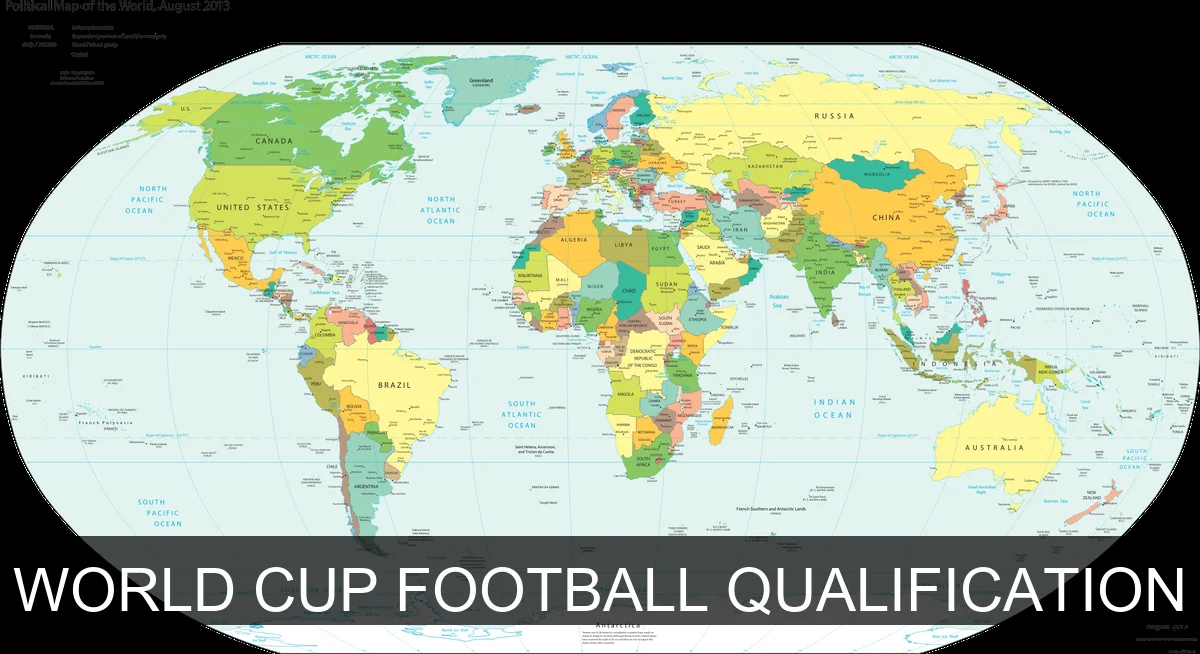
Image source: Openclipart
📋 Table of Contents
- 🔹 Setting the Stage: The Dream of Qualification
- 🔹 The FIFA World Cup 2026: A New Era
- 🔹 How World Cup Qualification Works: A Global Overview
- 🔹 A Deep Dive into the Qualification Zones
- 🔹 The Drama and Excitement of Qualification Matches
- 🔹 The Road Ahead: What to Expect for 2026
- 🔹 Interesting Facts & Fan Insights
- 🔹 Your Questions Answered: FAQ
- 🔹 The Unforgettable Journey Continues
Setting the Stage: The Dream of Qualification
Remember that feeling? It’s a Tuesday night, but it feels like the most important game of the season. Your national team is playing a crucial World Cup football qualification match. The stakes are incredibly high. A win means hope, a loss means the dream might just be over. That’s the magic of qualification, isn’t it?
For football fans like us, the World Cup is the pinnacle. It’s where legends are made and history is written. But before any team can lift that golden trophy, they must first navigate a challenging, often brutal, journey. This journey is called World Cup football qualification.
It’s more than just games; it’s about national pride, incredible comebacks, and heartbreaking near misses. It’s a global drama unfolding over years, bringing together billions of people. Today, we’re diving deep into this fascinating process, especially as we look towards the expanded 2026 tournament.
The FIFA World Cup 2026: A New Era
Get ready for something truly special in 2026! The next FIFA World Cup is set to be the biggest ever. For the first time, three incredible nations will share hosting duties: the USA, Canada, and Mexico.
But that’s not the only big change. The tournament itself is expanding from 32 to a massive 48 teams. This means more countries, more matches, and more opportunities for nations to compete on the world stage. Think about it – more dreams coming true! This expansion significantly changes the landscape of World Cup football qualification, offering more spots to almost all continents.
How World Cup Qualification Works: A Global Overview
At its core, World Cup football qualification is a structured process run by FIFA’s six continental confederations. Each confederation gets a certain number of spots in the final tournament. These spots are called “allocations.”
Here’s how it generally breaks down:
- Continental Tournaments: Every confederation designs its own qualification format. This can involve multiple rounds, group stages, and play-off matches.
- The Goal: Teams compete within their own continent to claim one of the allocated spots.
- Inter-Confederation Play-offs: Some spots are decided by play-off matches between teams from different confederations. It’s a final showdown for those last few places!
The system ensures representation from across the globe, making the World Cup a truly diverse event.
A Deep Dive into the Qualification Zones
Let’s take a closer look at how each continent handles its World Cup football qualification journey.
🔸 UEFA (Europe)
Europe boasts some of the strongest footballing nations, so its qualification process is always incredibly competitive. With a large number of spots, UEFA’s format usually involves:
- Group Stages: National teams are drawn into several groups. They play each other home and away.
- Direct Qualifiers: Group winners typically qualify directly for the World Cup.
- Play-offs: The best runners-up, or teams from the Nations League, often enter a play-off system. These are intense knockout matches where only the winners advance.
The battles in Europe are legendary, often featuring giants battling for supremacy and unexpected upsets.
🔸 CONMEBOL (South America)
South America’s qualification is a unique beast. It’s often described as the toughest in the world. Here’s why:
- Single League Format: All 10 CONMEBOL nations play each other twice, once at home and once away. This creates a marathon league table.
- High Altitude Challenges: Teams must endure grueling travel and play in challenging environments, including high-altitude cities.
- Top Spots: The top few teams in the league qualify directly. The next-best team usually goes into an inter-confederation play-off.
Every match in CONMEBOL feels like a final. There are no easy points here.
🔸 CONCACAF (North, Central America, Caribbean)
CONCACAF’s qualification process involves many nations, leading to a multi-stage format. For the 2026 World Cup, the hosts (USA, Canada, and Mexico) will automatically qualify. This opens up spots for other hopefuls:
- Preliminary Rounds: Smaller nations compete in early rounds.
- Group Stages: Teams advance to groups, playing home and away.
- Final Round (e.g., “Octagonal” or similar): The top teams face off in a final group. The best teams secure their spots, with others heading to inter-confederation play-offs.
The journey through CONCACAF is long and varied, showcasing talent from across the region.
🔸 CAF (Africa)
African qualification is known for its passion, physical play, and unpredictable nature. With an increased number of spots for 2026, the competition will be fiercer than ever:
- Preliminary Rounds: Many nations participate, often starting with knockout matches.
- Group Stages: Teams are then divided into groups.
- Direct Qualifiers: Group winners typically secure their place in the World Cup.
The African qualifiers are often filled with drama, last-minute goals, and incredible atmospheres in stadiums across the continent.
🔸 AFC (Asia)
Asia’s qualification journey is extensive, involving a huge number of teams from diverse footballing backgrounds. As Asian football continues to grow, more spots are available for 2026:
- Multiple Rounds: Several stages of group play and knockout matches.
- Home and Away: Teams travel across the continent, facing different styles of play.
- Direct Spots & Play-offs: The top teams from the final rounds qualify directly, while others might enter intra-confederation play-offs or inter-confederation play-offs.
The AFC qualifiers are a true test of endurance and consistency.
🔸 OFC (Oceania)
The Oceania Football Confederation usually has the fewest direct spots. Often, the winner of the OFC qualification tournament progresses to an inter-confederation play-off, rather than directly to the World Cup.
- Regional Tournament: Teams compete in a tournament format.
- Play-off Path: The winner gets a chance to play against a team from another continent for a World Cup berth.
It’s a challenging path for Oceania nations, but the dream of making it to the World Cup is a powerful motivator.
🔸 Inter-Confederation Play-offs
These are the ultimate last-chance saloon for teams that narrowly missed out on direct qualification. Imagine this: a team from Asia facing off against a team from South America, or one from CONCACAF battling an African side.
- Format: Typically, these involve a mini-tournament or single-leg knockout matches between teams from different confederations.
- High Stakes: The winners claim the final few coveted spots at the World Cup.
These matches are often the most dramatic of the entire qualification cycle, filled with raw emotion and incredible moments.
The Drama and Excitement of Qualification Matches
If you’ve ever followed a qualification campaign, you know the feeling. It’s not just about the final score; it’s about every pass, every tackle, every moment. We’ve all seen those dramatic last-minute goals that send a nation into euphoria or silence a stadium.
“The qualification process is where the true heart and soul of a football nation is revealed. It’s a test of character, resilience, and sheer will to win.”
Think about underdog stories, like Iceland’s incredible run to qualify for their first World Cup. Or the sheer tension of a penalty shootout in a play-off match. These are the stories that make World Cup football qualification so captivating. Every point matters, every match is a battle, and the collective hope of a country rides on the shoulders of its players.
The Road Ahead: What to Expect for 2026
With the 2026 World Cup expanding to 48 teams, the allocation of spots for each confederation has changed significantly. While the exact schedules for all confederations are still being finalized, here’s a general idea of the expected direct qualification spots, plus an additional inter-confederation play-off spot for each continent:
| Confederation | Expected Direct Spots (2026) | Play-off Spots (2026) |
|---|---|---|
| AFC (Asia) | 8 | 1 |
| CAF (Africa) | 9 | 1 |
| CONCACAF (N/C America) | 3 (Hosts: USA, Canada, Mexico) + 3 | 2 |
| CONMEBOL (South America) | 6 | 1 |
| OFC (Oceania) | 1 | 1 |
| UEFA (Europe) | 16 | 0 |
(Note: These numbers are based on announced allocations for the 48-team format and are subject to minor adjustments by FIFA.)
This expansion means more teams will have a genuine shot at qualification. It will also bring new faces and styles of play to the tournament, making it even more exciting. The qualification matches for 2026 have already begun in some confederations, and the action will only intensify in the coming years.
Interesting Facts & Fan Insights
- Longest Journey: Some teams travel thousands of miles for their away qualification matches, crossing multiple time zones. Talk about dedication!
- Record Streaks: Brazil holds an incredible record for being the only team to have played in every single World Cup tournament. Their World Cup football qualification has been flawless.
- Biggest Upset: Who can forget when South Korea knocked out Italy in 2002? Or when Trinidad and Tobago qualified for the first time in 2006 against all odds? These moments define the qualification process.
- Highest Scoring Match: In 2001, Australia famously beat American Samoa 31-0 during OFC qualification. A truly unforgettable scoreline!
Your Questions Answered: FAQ
How many teams qualify for the FIFA World Cup 2026?
For the FIFA World Cup 2026, a total of 48 teams will qualify. This is an increase from the previous 32-team format.
Do host nations qualify automatically for the World Cup?
Yes, host nations traditionally qualify automatically. For the 2026 World Cup, the three host countries – USA, Canada, and Mexico – will all receive automatic berths.
What are inter-confederation play-offs?
Inter-confederation play-offs are a special set of matches where teams from different continents, who haven’t directly qualified, compete for the final few World Cup spots. It’s like a mini-tournament at the very end of the qualification process.
When does qualification start for the 2026 World Cup?
Qualification for the 2026 World Cup has already begun in some confederations, like CONMEBOL and AFC. The full schedule for all regions will roll out over the next few years, with most campaigns expected to intensify from 2024 onwards.
Which confederation typically has the most World Cup spots?
Historically and for the expanded 2026 tournament, UEFA (Europe) receives the largest number of direct qualification spots due to the high number of strong footballing nations within the confederation.
The Unforgettable Journey Continues
So there you have it, a comprehensive look at the thrilling world of World Cup football qualification. From the grueling South American league to the intense European play-offs, every continent offers its own unique challenges and stories.
The journey to the World Cup is a testament to perseverance, skill, and national pride. As fans, we get to witness raw emotion, incredible talent, and moments that stay with us forever. The expansion to 48 teams for 2026 means even more excitement and more opportunities for new nations to make their mark.
So, clear your schedule, rally behind your team, and get ready. The road to glory has already begun, and the next few years promise to deliver unforgettable memories on the path to the 2026 FIFA World Cup!
Which qualification campaign are you most excited to follow? Let us know in the comments!